What Is a Number Line? How to Fill in Missing Numbers from 10 to 60 (Step-by-Step Guide)
Number Line Worksheet: Fill in the Missing Numbers (Counting by Tens)
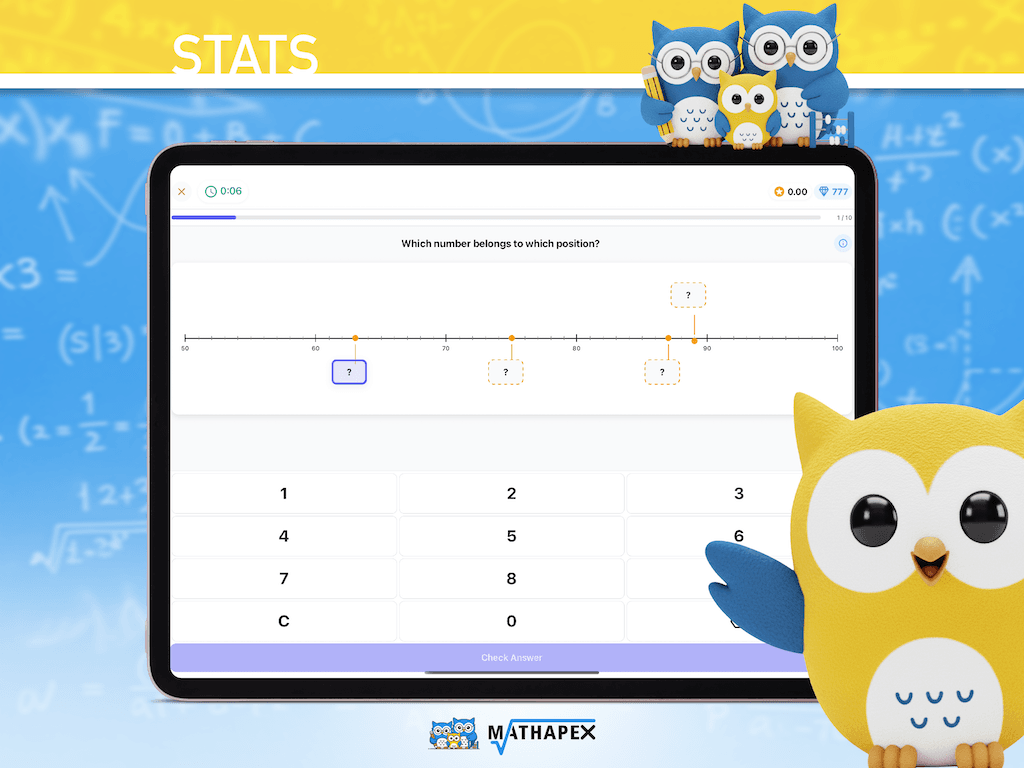
The number line starts at 10 and ends at 60. The orange dots mark every ten: 10, 20, 30, 40, 50, 60. Some positions have question marks, and we need to figure out the correct number for each spot.
Step-by-Step Solution
- Identify the start and end: The line begins at 10 and ends at 60. It increases by 10 each time (skip counting by tens).
- Read the known numbers: Look for the labeled points: 10, 20, 30, 40, 50, 60.
- Use the +10 rule to fill in the blanks:
- 10 + 10 = 20
- 20 + 10 = 30
- 30 + 10 = 40
- 40 + 10 = 50
- 50 + 10 = 60
- Write the missing numbers under each ?: Match each orange dot to the next ten.
Quick Reference Table: Missing Numbers Solved
| Position (marker) | What number goes here? | How did you find it? |
|---|---|---|
| Starting point (left) | 10 | Already labeled |
| First ? (under 20) | 20 | 10 + 10 |
| Next ? (under 30) | 30 | 20 + 10 |
| Middle big marker | 40 | 30 + 10 |
| ? under 50 | 50 | 40 + 10 |
| Far right ? | 60 | 50 + 10 |
Why Use a Number Line? Benefits for Kids
Number lines build important math skills, including:
- Understanding place value and tens
- Visualizing number order and sequences
- Preparing for addition, subtraction, and more advanced math
- Developing logical thinking and pattern recognition
Tips for Similar Number Line Activities
- Always remember the +10 (or -10) rule for tens patterns.
- Use your finger or a pencil to “jump” along the line while counting.
- Color the tens groups differently (e.g., blue for 10-20, green for 20-30) to make it fun.
- Turn it into a game: “Start at 30. Jump forward 3 tens – where do you land?”
Key takeaway: Number line exercises like this may look simple, but they lay a strong foundation for understanding numbers up to 100 and beyond. Practice regularly, and your child will master skip counting in no time!
Need help with a different number line example or a harder worksheet? Drop a comment below! 😊